Ecommerce SEO
In today’s digital marketplace, having a stunning online store is only half the battle. If your target customers cannot find your products on search engines, you are leaving substantial revenue on the table. Paid ads can yield quick wins, but they become increasingly expensive over time. That is where Ecommerce SEO (Search Engine Optimization) comes in—your most powerful tool for sustainable, long-term growth.
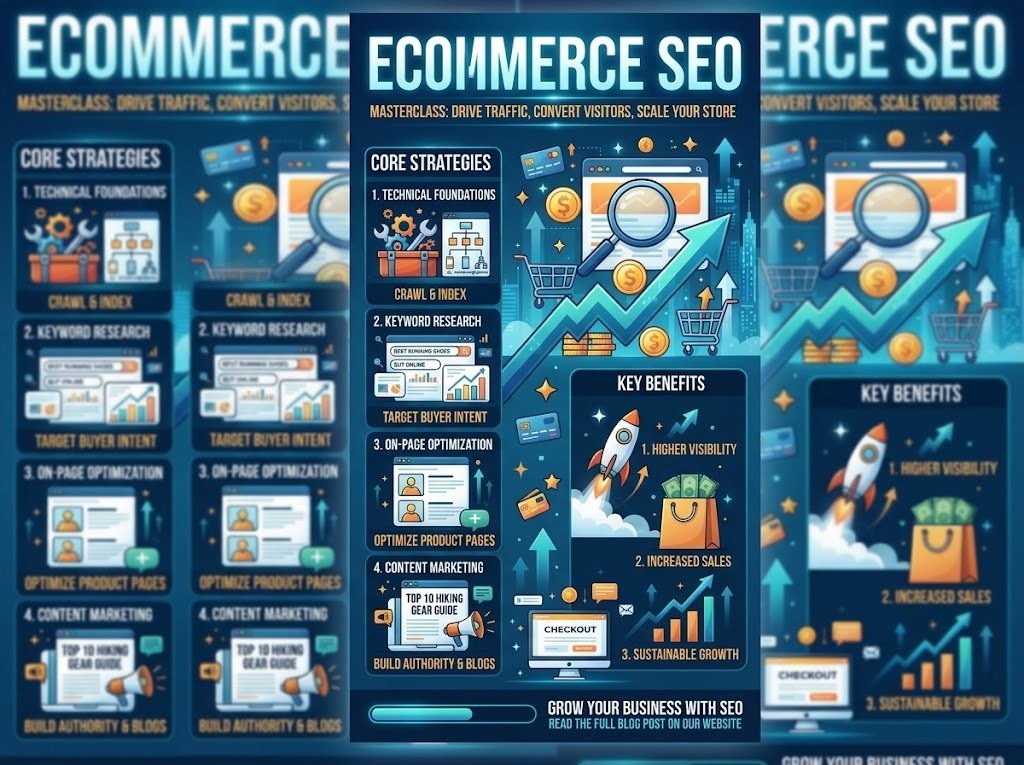
Why Ecommerce SEO Matters
Unlike standard informational websites, ecommerce sites face unique hurdles: massive product catalogs, frequently changing inventory, duplicate product descriptions, and stiff competition. However, mastering ecommerce SEO allows you to bypass ad fatigue and capture high-intent traffic—shoppers who are actively typing terms like “buy organic green tea” or “best deals on 4K TVs” into search bars.
By aligning your store with how people search, you build organic trust and guide potential buyers smoothly from curiosity to checkout.
Step 1: Strategic Keyword Research
Great SEO begins by understanding the language of your buyers. Ecommerce keyword research is split into two primary buckets:
- Category Pages (High-Volume & Broad): Target broader terms like “men’s leather boots” or “stainless steel cookware”. These capture users who are exploring options.
- Product Pages (Long-Tail & Transactional): Focus on specific queries like “waterproof size 10 men’s hiking boots” or “10-inch ceramic frying pan.” These searchers are closer to making a purchase.
Look into Google Search Console, review customer support tickets, or analyze on-site search queries to discover the exact terms your audience uses.
Step 2: Optimize Your Site Architecture
A clean, logical site structure is essential for both user experience and search engine crawlers. Follow the three-click rule: users (and search bots) should be able to reach any product on your site within three clicks from the homepage.
- Keep URLs short, descriptive, and clean (e.g.,
[yourstore.com/category/product-name](https://yourstore.com/category/product-name)). - Implement a logical hierarchy: Homepage $\rightarrow$ Category Pages $\rightarrow$ Subcategory Pages $\rightarrow$ Product Pages.
- Use internal linking strategically to pass “link equity” from high-performing pages down to newer or deeper product pages.
Step 3: Polish On-Page SEO
Every product and category page serves as a landing page for search engines. Optimize these core elements to stand out in search results:
- Title Tags & Meta Descriptions:Keep title tags under 60 characters, featuring your primary keyword alongside a compelling benefit (like “Free Shipping” or “25% Off”). Write descriptive meta descriptions that encourage click-throughs.
- Unique Product Descriptions: Avoid using manufacturer-provided descriptions, which lead to duplicate content issues across the web. Write unique, benefit-driven text with bullet points for readability.
- Image Alt Text:Search engines cannot “see” images.Use descriptive, keyword-rich file names and alt text (e.g.,
brown-leather-tote-bag.jpg) to capture image search traffic.
Step 4: Technical SEO and Schema Markup
Technical optimization ensures your store runs smoothly under the hood.
- Page Speed & Core Web Vitals: Slow-loading pages kill conversion rates and hurt rankings. Optimize images, leverage browser caching, and streamline your code.
- Structured Data (Schema Markup):Implement Product Schema on your pages. This allows search engines to display rich snippets—such as star ratings, prices, and stock availability—directly in the search results, massively boosting your click-through rate.
Conclusion
Ecommerce SEO is a marathon, not a sprint. By prioritizing clean architecture, targeted keywords, unique content, and technical health, you build a resilient foundation that continuously attracts ready-to-buy shoppers.
What is the biggest challenge you currently face when trying to rank your online store’s product pages?